Specialist Fence Company Handiwork
There's a certain sort of quiet pride that comes with a fencing done right. Not the fancy kind, not the "consider me" kind, yet the sturdy, lived-in kind. The gate swings true. The boards line up like they were gauged with a string and a constant hand, not with uncertainty and optimism. Rain runs where it should, wind does not locate easy gaps, and six months later the fence still looks scheduled rather than patched.
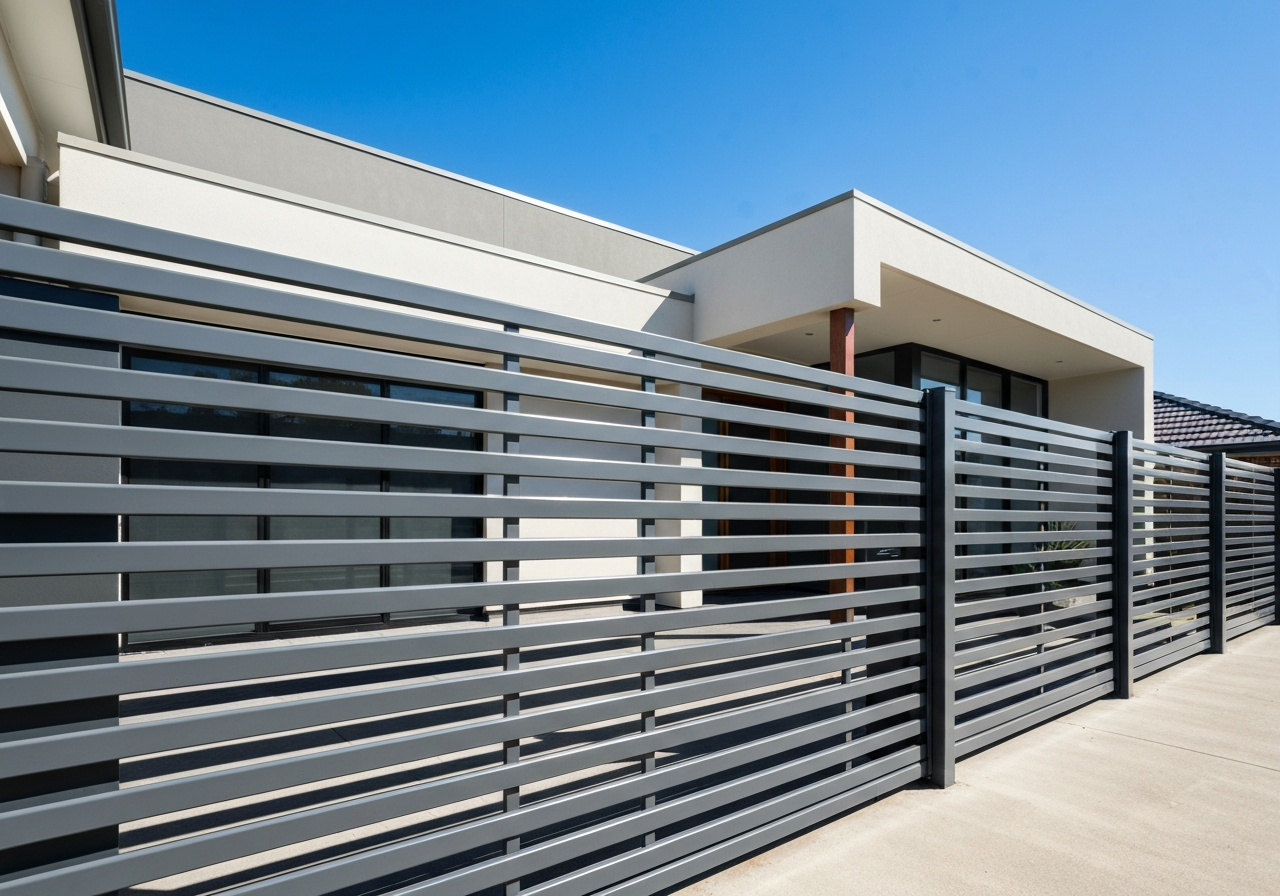
I've worked around enough work websites to recognize the distinction quickly, even prior to the consumer claims anything. You can hear it in the rhythm of a team: consistent, exercised, mindful. You can see it in the little decisions that rarely get photographed, like just how blog posts are established, just how fasteners are chosen, and exactly how edges obtain completed so the unavoidable bumps and weathering do not develop into long-lasting damage. Professional fence company craftsmanship is less about one dramatic trick and more about countless tiny options made appropriately, in the ideal order.
The work starts before the very first board hits the ground
People assume fence building is mainly carpentry, yet workmanship begins with preparation. If you avoid the early actions, the whole project ends up being an arrangement in between your format and the truth of the site.
The terrain constantly has viewpoints. One edge of a yard might be flawlessly level, while the following decreases enough to make a "straight line" appear like an error. Trees, origins, utility lines, lawn sprinklers, and old fencing remnants can all transform an easy face a puzzle. A staff that appreciates high quality walks the line with intent, not just to mark where the fence "must" be, but to comprehend where it can be developed cleanly.
On one recent set up, the homeowners desired a typical timber format. The strategy looked uncomplicated on paper. Then we located the sprinkler heads and a thick root network that really did not turn up until we got more detailed. The handiwork problem had not been the origin, it was the decision-making. We changed the design a little to maintain blog post openings out of the heaviest interference, and we utilized spacing and grading options that stayed clear of strange board widths later on. The end result matched the style, and the fencing avoided the kind of future headaches that start with small concessions and end with a leaning mess.
Good workmanship is also about communicating expectations early. For example, fencing height is not just a number. It's tied to upload deepness, rail positioning, gate hardware, and just how the ground will be dealt with. If the fencing is indicated to follow an incline, there are visual trade-offs. Step-style fencing lines can look rough if the lawn drops gently. Racking designs can look seamless until you observe how the rails act under different board spacing. A professional fence company generally helps the consumer choose an approach that fits the residential or commercial property, not just a choice pulled from a picture.
Posts are the foundation of the whole personality
Every fencing has a personality, and posts are where that character begins. The biggest workmanship informs appear below: plumb, depth, spacing, and how the base stands up to activity over time.
Think concerning what a fencing deals with. Wind lots are genuine, particularly for strong panels. Ground conditions differ hugely, from clay that swells and shrinks to sandy dirt that changes after hefty rainfall. Even in "great dirt," freeze-thaw cycles can urge tiny activities that intensify. If posts are established delicately, the rest of the fence setting up can just hide the repercussions for so long.
Setting messages appropriately includes more than digging holes. The handiwork issues in how the hole is prepared, whether water drainage is addressed, and how the message is held stable while the product sets. There's a useful factor a lot of pros insist on consistency in between messages. A fence can forgive slight variants in board alignment, however it can not forgive a series of messages that wander out of plumb. Once the articles wander, you wind up requiring rails to act like they have opinions. That's when gaps grow, gateways stop locking, and the client begins noticing "that area" that constantly appears off.
I have actually seen fencings with best materials and careless blog post installation. In those situations, the installer essentially traded time for future labor. They could get it looking appropriate the week the job coatings, but when the ground actions, the fencing responds, and the feedback is normally noticeable: twisted rails, uneven panel alignment, or equipment that binds.
The products choice you don't see on day one
Workmanship isn't only concerning exactly how something is constructed. It's likewise regarding what it's constructed with, and exactly how well that product matches the environment.
Wood fencings, for instance, depend heavily aboard top quality, appropriate treatment, and fasteners that won't wear away prematurely. A common blunder is making use of the right-looking wood and after that fastening it with hardware that wasn't chosen for outdoor direct exposure. Stainless and specific covered fasteners can cost even more, yet the price is usually more affordable than early replacement after corrosion stains, loosening up, and board warping show up.
Composite and vinyl have their very own rules. Appropriate growth and fastening spacing issue. Too limited and you invite bending. Too loosened and you welcome activity and panel voids. Metal fencings also have information that impact longevity, including finish integrity and how brackets rest to prevent wetness traps.
An excellent fence company deals with these options like a craftsman, not like a spec sheet. They represent what the consumer desires and what the website demands. If you desire a certain appearance, in some cases you need to readjust assumptions about maintenance. A fencing that expands greener in one season can also hide water issues if it catches wetness against bolts or leaves.
Alignment, spacing, and the "virtually straight" problem
The human eye is fierce with positioning. It could not capture a little inconsistency at the beginning of a run, but it will certainly notice the disparity by the time you reach the midpoint. That's why craftsmanship includes design self-control. Pros action, mark, and examine often, not because they love determining, but since they've learned where tiny errors tend to multiply.
Board spacing is a terrific instance. Slightly irregular gaps resemble negligence, even when the fencing is structurally sound. If the spaces are inconsistent because the rails weren't established uniformly or since the boards were cut without bookkeeping for mild variations in rail degree, it reveals. A lot of consumers uncommitted exactly how it took place, but they do care what it resembles when they walk outside every day.
When building along a slope, alignment becomes a craft. You can pick an approach that keeps the leading line constant, a technique that steps down, or a method that complies with grade with regulated board angles. Each has aesthetic repercussions. A professional technique implies selecting the method that matches the property's shape and the fencing design's designated look.
I keep in mind a task where the property owner requested a "clean straight leading line" on a delicately sloped backyard. The crew could have compelled it, yet requiring it would have required awkward board shapes or limited cuts that damaged completions. Rather, we used a rail format strategy that kept the leading line visually constant while preserving practical structural integrity. The fence looked intentional rather than "readjusted."
Gates: where workmanship either holds up or reveals shortcuts
If you intend to evaluate a fence install quickly, view the gate. Gates experience motion, take advantage of, and repeated use. They additionally disclose when equipment was chosen without recognizing the fencing's structure.
A gateway that drags or does not latch isn't simply a nuisance. It changes just how individuals use the fencing, which use can present tension where the fence must be steady. Gradually, a poorly set entrance can loosen bolts and shelf rails, also if the rest of the fence appears fine.
Gate handiwork appears in a few areas. The framework requires to be square. The hinge places should be precise. The latch demands to satisfy the strike properly without requiring it. And eviction has to be developed with enough clearance to handle small settling, swelling, or temperature-related changes.
On a gusty lot, I once enjoyed a consumer's existing entrance flap since the joint screws had actually loosened slightly after duplicated gusts. That "minor" looseness was the start of a larger issue. When we changed the fencing and reset the gate properly, we tightened up the system at its weak points and guaranteed the joints had a stable mounting surface. Unexpectedly, eviction acted predictably, even when the rest of the backyard was being battered by weather.
Workmanship additionally consists of the unseen placement in between gateway and fencing line. If the fencing blog posts and rails are not constant, eviction structure will never sit correctly. The equipment can only make up so much.
Weather resistance is a workmanship ability, not just a products trait
Every area has its very own brand name of punishment. Coastal locations bring salt spray and corrosion. Snowy environments bring freeze-thaw cycles and heavy tons from accumulating ice. Warm climates can warp timber or stress bolts. Also the direction of prevailing wind matters.
A fence company that develops for long life treats weather condition as component of style. That includes spacing that prevents water from merging, correct article ending up or sealing where needed, and decisions that prevent capturing dampness at joints. It additionally includes regulating just how rainfall drains pipes across surfaces and just how ends of boards get handled, since end grain is where water loves to go.
Wood fencings are a perfect instance of where information matter. If boards are set up in a way that traps dampness against structural members, the fencing can degeneration from the within out. Appropriate setup includes exactly how the boards are oriented, exactly how the top edge sheds water, and how fasteners are positioned so boards do not divided therefore water does not wick along cracks.
With metal and vinyl, workmanship changes to just how panels and elements are secured. If something is installed as well rigidly without enabling movement, it can stop working too soon. If it is also loose, it can rattle and function itself right into misalignment.
The theme coincides throughout products: handiwork anticipates what weather will do to the system.
The small points that divide a "great" fencing from a great one
Most clients focus on what they can see clearly. Pros focus on what will certainly matter once the fencing is no longer new.
For instance, completion caps and trim information that prevent water access might not be the first thing somebody notifications when the project is completed, yet they are the very first points that decrease wear in the following season. Furthermore, correct spacing near the bottom can minimize particles buildup and protect against moisture from sitting versus timber or developing paths for rot.
Another difference is how sides are completed. A fencing with tidy cuts and mindful board finishes is much easier to keep and more immune to aesthetic damage like splintering, peeling, or warping at tension factors. These results are primarily controlled by technique: sharp devices, appropriate cutting strategies, and the self-control to stay clear of "good enough" finishing on edges that are tough to review later.
Even the pacing of the work can mirror handiwork. A staff that stops to examine plumb, measures once more after adjustments, and does not rush with curing and establishing steps is constructing for lasting results. A hurried mount might look penalty in daytime, but it frequently hides disproportion that appears under various light or after the fencing has actually had time to settle.
Concrete, crushed rock, and the argument nobody need to guess at
Post setup is where viewpoints flare up online, but real craftsmanship depends upon neighborhood problems. Concrete can stabilize messages, but it can likewise produce water drainage problems in certain soils if it's done without a plan. Gravel can assist with water drainage, yet if it condenses incorrectly or does not support the message correctly, you can get settlement.
The honest truth is that there is no solitary global technique that fits every yard. A professional installer examines dirt kind, drainage patterns, and wind lots expectations. Sometimes the best choice uses concrete with mindful placement so water is taken care of. Sometimes the best alternative avoids enclosing the blog post totally. Occasionally the best solution is a specific mix or a details method because the site problems demand it.
Here's the practical viewpoint I trust most: workmanship is not "what your friend made use of." It's what stands up on that particular particular site. If a fencing is installed with a system that makes sense for local ground habits, the fence is more likely to stay straight.
If you're evaluating quotes, don't simply ask "Do you use concrete?" Ask exactly how the team prepares to set messages based upon soil and drain. A credible fence company ought to have the ability to describe their approach without seeming like they're reciting a script.
Managing the edge situations: the spots consumers always remember
Fences rarely run in best straight lines. Corner changes, residential property lines with strange angles, limited problems, and areas near trees or landscaping produce the moments where handiwork confirms itself.
One typical edge case is the "last post" near a border where the surface is awkward. If the team forces it, the fencing may look somewhat incorrect right at the end, which little aesthetic inequality ends up being the very first thing the client points out every single time they stroll by. A pro will certainly put in the time to gauge and set that message very carefully, even if it costs a bit even more time throughout mount. They likewise think about just how the last board fits, so the edge looks finished rather than improvised.
Another edge instance is where the fence meets existing frameworks. A fencing that abuts a home structure or a driveway edge needs trim, spacing, and bolt decisions that secure the system from water intrusion. Workmanship is commonly regarding protecting against future damages rather than producing a best snapshot.
And then there's the tree problem. Roots can disrupt article holes, and trees can expand in ways that place new pressure on rails and boards. A specialist strategy may avoid the heaviest origin areas, or it may reroute the fence somewhat. That choice is part of workmanship, since it determines whether the fence stays secure as the landscape changes.
What "professional" resembles while the staff is still there
You can discover a great deal by observing how a team behaves during the job, even if you're not accustomed to building details.
Professional handiwork has a tendency to turn up as regular method. Messages are looked for plumb before any kind of last actions are taken. Cuts are clean, and waste is taken care of sensibly. Tools are used appropriately, not like a person is improvising due to the fact that the plan changed midstream. The crew also appreciates the design, meaning they keep determining instead of relying on memory.
There's additionally the way they handle modifications. When something needs adjusting, an excellent fence company doesn't treat it like a hassle. They repair it while it's still simple. That's exactly how craftsmanship survives the real world, where tiny problems show up also in tactical work.
If you want to ask the appropriate inquiries, focus on decisions instead of jargon. Ask exactly how they deal with slope changes. Ask how entrances are straightened and what equipment is made use of. Ask what occurs if they face below ground sprinklers or old lines. A team with actual craftsmanship will certainly have a grounded solution and a plan.
To make that useful, right here are a few concerns I have actually discovered home owners can ask without transforming the conversation into a test:
- How will you take care of articles on an incline so the fencing looks intentional, not "covered"?
- What bolts are you utilizing and why, based upon my neighborhood weather?
- How will certainly you straighten and adjust eviction so it locks appropriately over time?
- What's your prepare for drainage and just how does it impact message setting on my soil?
- If you hit a challenge like an origin or a lawn sprinkler line, just how do you adjust the layout?
A cautious crew will certainly respond to in simple language, and you'll see whether they talk about end results and methods or practically the final product.
How to secure your investment after the install
A professional fence install is not "set it and neglect it," but it additionally does not require consistent focus. Most resilience comes from simple maintenance done at the best times.
Wood usually benefits from examination for bolt loosening, splintering, and indicators of rot at board ends. Any kind of damages that lets water catch versus surfaces should be resolved swiftly. Plastic and compound can be cleaned up without harsh abrasion, and steel fences take advantage of checking for scrapes that can subject bare material.
One of one of the most useful habits is seasonal examination, particularly before and after severe weather. Look for leaning blog posts, loosened entrance components, unusual gaps, or boards that are moving. If an issue is caught early, the repair work is often small. If it's overlooked, the fencing ends up being a chain reaction.
Maintenance is additionally where handiwork becomes visible once more. A fence constructed with accessible equipment and tidy building details often tends to be much easier to keep. A fencing constructed inadequately commonly transforms repair services right into a larger demolition project.
The genuine trade-off: speed versus certainty
Fast installs have their charm. People want the fencing up quickly, and nobody takes pleasure in waiting. But speed can be the opponent of craftsmanship if it brings about missing dimensions, hurrying article setting, or utilizing faster ways that hide future movement.
The difference between a hurried job and a well-paced one is the confidence that receives the procedure. An expert fence company might take longer not because they appreciate dragging it out, however since they are reducing the risk of rework. Rework is pricey in labor, materials, and client patience.
There's a middle ground that I think of as "productive time." The team works efficiently, yet they do not miss the checks that matter. They don't close off steps before the system has actually supported. They do not make believe that dirt conditions are unimportant. That balance is the heart of workmanship.
If you desire a basic benchmark for craftsmanship without getting technological, it's this: do you see the crew doing tiny checks repeatedly throughout the day? Do you see mindful placement and clean completing? Are the blog posts established with purposeful stability? Those hints typically correlate with exactly how the fence will certainly look and behave months later.
A brief handiwork checklist you can make use of best away
If you're strolling the website and want a sensible method to analyze the job without coming to be a professional, make use of these quick checks. They're not around nitpicking, they're about capturing one of the most common failures early.
- Posts show up plumb and evenly spaced, and the line looks directly from multiple angles
- Boards and rails have constant spacing and clean, straight cuts
- Gate hardware is placed correctly, with smooth movement and proper latching
- Fasteners look consistent and proper for outside exposure
- Edges and ends are completed in such a way that aids shed water and minimize wear
If those boxes are primarily examined, you're likely considering handiwork that will certainly age well.
What customers truly obtain when handiwork is solid
A fence is among those purchases that affects life more than people expect. It structures your yard, regulates accessibility, and provides you privacy in a way that really feels instant. It also transforms how your exterior area is utilized. A fence that acts properly invites you to live around it confidently, because it does not need mental maintenance.
When handiwork is exceptional, the fencing holds its shape. It withstands the little activities that cause rails to wander and gates to bind. It remains aesthetically regular, implying the consumer does not have to accept a "good enough" look that slowly becomes irritating. And it reduces the chances of expensive modifications later.
Sometimes the most effective proof comes silently, not significantly. Months after the mount, the boards still line up. The fencing still looks calculated. The gate still closes without a shove. That's the end result you can't buy with low-cost materials or hopeful planning. You make it with method, persistence, and responsibility on the job site.
The journey is in obtaining it right, not simply obtaining it done
There's a daring streak in building fencings well, because you're working with changing conditions, incomplete boundaries, unpredictable ground, and real restrictions that do not appear in sales pictures. You discover the backyard. You appreciate the pressures at play. You award-winning fence company choose based on experience, not guesswork.
Professional fence company handiwork is the amount of those decisions. It's the quiet discipline behind a straight line, the mindful thought behind a lock that never ever battles you, and the attention to weather resistance that maintains the fencing looking strong through the seasons.
When you hire well and view carefully during the develop, you're not just acquiring products. You're purchasing a procedure that understands the distinction in between a fence that makes it through and a fencing that lasts.